Water Extraction in Los Angeles, CA
You walked into the kitchen and the floor was under an inch of water. The supply line under the sink let go sometime in the night, and the water has already reached the hallway. This site connects you by phone with an independent local provider who does water extraction in Los Angeles County.
What the crew does first
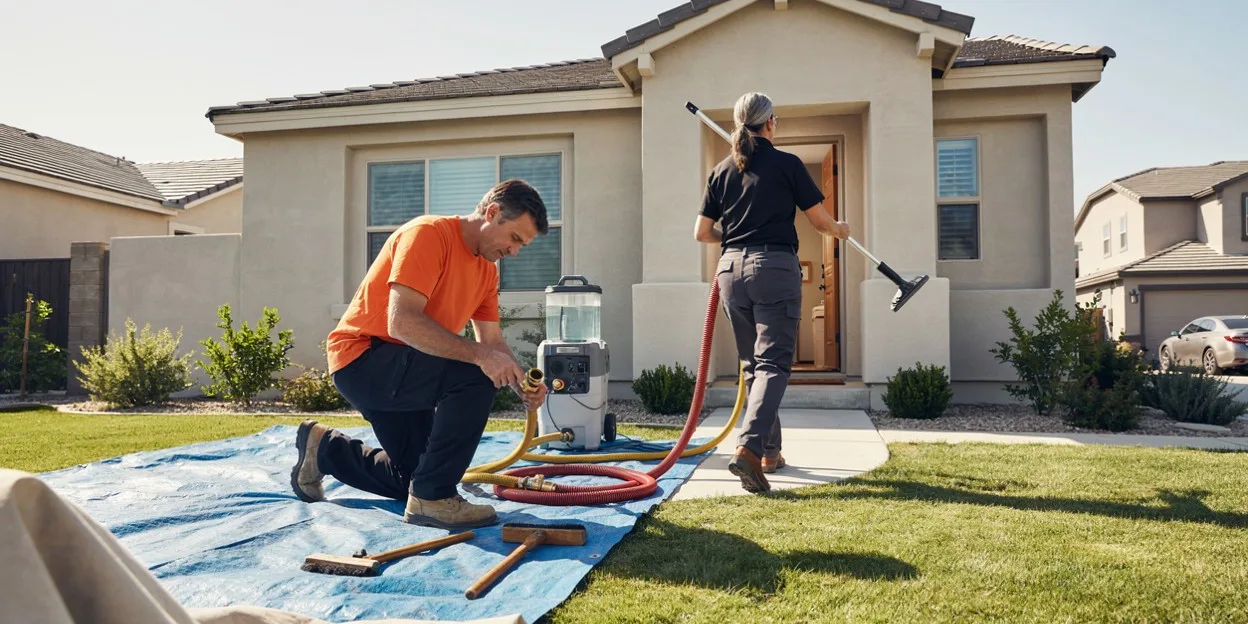
The crew that comes out starts by making sure the water is stopped. If it is not, they will show you the valve. Then they pump or vacuum the standing water off the floor with truck-mounted or portable extraction units. A wet vac from the garage leaves a lot behind. Extraction gear pulls water up out of carpet pad and grout lines.
Once the bulk water is gone, they walk the rooms with a moisture meter. Water travels under baseboards and into the next room before you see it. The readings show where it went. That map decides where drying equipment goes and which materials get pulled.
What to do in the next hour
Shut the water off if you can reach the valve safely. Most Los Angeles homes have a shutoff where the line comes in from the meter, often near the front hose bib. Do not step into water that has reached an outlet, a power strip, or an appliance cord.
Move what you can lift out of the wet area. Put foil or plastic under furniture legs you cannot move. Take photos with your phone before anything is moved or pulled up. Then make the call.
What is usually saved and what is not
Tile and sealed concrete usually clean up fine once the water is out. Solid hardwood can often be dried if extraction starts soon, though some cupping is possible. Carpet can sometimes be saved. The pad under it almost never is.
Laminate flooring, particleboard cabinet bases, and wet drywall below the water line usually come out. Ask the crew what reading supports each removal. Extraction is only the first step. Structural drying with air movers and dehumidifiers is what brings the walls and floor back to normal.
Los Angeles County notes
Much of the county's housing was built before 1980, and a lot of it sits on a concrete slab. Water on a slab has nowhere to drain, so it spreads flat across the house and wicks up into the walls. In the City of Los Angeles the water utility is LADWP. Other cities and unincorporated areas have their own water companies, and your bill shows which one. If you cannot find or turn the house valve, the utility can shut water off at the meter.
Many policies cover sudden water damage from a burst line or a failed hose. Gradual leaks often are not. Ask the crew to document moisture readings and photos so you have them for your adjuster. If the loss started in an upstairs condo unit, tell the crew and notify the HOA in writing the same day. If you see stains overhead, read about ceiling water damage repair. If the water came from a drain or toilet rather than a supply line, it is handled as sewage cleanup.
Calling about water extraction
Have the address ready and know roughly when the water started. Be ready to say which rooms are wet, whether the water is still running, and whether it came from a supply line or from a drain. Say if there is standing water right now. Call (000) 000-0000.